








I don’t know why these childhood memories are lingering in my mind today. That year I’m remembering, two little kids had come to stay in our house for some time from a faraway town. They were distant relatives of Appa’s. The older one, Pranesha, was about 10 years old. His sister, Sudha, was about seven.
Pranesha and Sudha came from an indigent family of modest means. As they were of the same age as Akka and me, respectively, Appa had invited them over to our house so that the four of us could enjoy our vacation together.
Both Pranesha and Sudha were sharp and active. As soon as they came to know about the water scarcity in our town, they started accompanying us to the tap pit with brass pots to help us fetch water, saying, “We are quite adept at carrying water, as we have the same problem in our town as well.”
Sudha used to sit with Amma and help her sort the lettuce. She was very well-behaved and never threw tantrums about missing her parents. Dressed in a red skirt and a yellow top, Sudha would move around the house, filling the air with her giggles and the jingle of her anklets. Pranesha, on the other hand, would drape his little angavastram as a dhoti, gaudily smear the Gopichandana on his forehead, and sit in the hallway and do Sandhyavandane.
It was the month of October, when our town is surrounded by greenery. Usually, it’s when all the kids of our town team up to pay a customary annual visit to the Gandi Narasimha Swamy Temple, located about six kilometres from our town. Incidentally, as our maternal uncle, our Mava, was also visiting us around the same time, he assumed the responsibility of taking the whole battalion of kids to the temple.
We carried bisibele bath and curd rice packed from home. After praying at the temple, we played to our heart’s content and then settled on the banks of a rivulet to eat. Digging little water springs alongside the rivulet, we quenched our thirst. After playing with the monkeys for some more time, we happily headed home.
Near our town’s entrance, a new restaurant had come up. Mava took all of us to the new restaurant. We had never gone to a restaurant in our own town. Sometimes, when we went to Bellary or Hospet, Appa would occasionally treat us to a masala dosa. As Appa didn’t approve of going to a local restaurant unnecessarily, we were a bit scared to enter. However, Mava instilled confidence in us and bought coffee for all of us. We were all thrilled to drink coffee in our town’s restaurant for the first time.
As Amma had insisted that we return home before it got dark, we hurriedly left the restaurant and scurried towards home. We had barely taken a few steps when, “Prananna… Pranannaa,” Sudha yelled anxiously.
“What’s up, Sudha puttee?” asked Pranesha.
“Er … the coffee was too hot … I couldn’t really finish it fully. Actually, I could have only half of it, the other half I left in the tumbler,” confessed Sudha.
Hearing that, Pranesha was visibly scared and said, “We’ve had it if Amma gets to know of it.” He then ran back to the hotel in a flash.
Even before we could understand what was going on, Pranesha returned with a smile on his face and said, “Don’t worry, Sudha, I finished the leftover coffee, we don’t need to fear any scolding now.”
Sudha seemed relieved to know that.
Now, when we think of such incidents, they seem funny. But in our childhood, we didn’t dare waste any food for fear of being scolded by our parents. On top of it, by linking it to some religious beliefs, our elders ensured that we didn’t throw away anything. For instance, everyone believed that Goddess Lakshmi would desert you if you left any food unconsumed on your dinner plate. Although all of us were poor already, we still feared that Lakshmi would leave us! Despite haunting poverty, everyone sincerely believed in such myths.
Occasionally, despite Amma’s strict vigil over the vegetables she used in her cooking, a couple of bitter cucumbers or corns would somehow find their way into her curry or salad. But even on such days, Appa would finish his plate to a sparkle. He would clear his plate with such impeccable finesse that Amma eating from the same plate never seemed awkward to us.
On festival days, we’d obviously have quite an assorted menu. With so much food available, Akka and I would end up grabbing more food than we could finish. Appa didn’t like to scold us for wasting food on a festival day but he couldn’t bear to see the food being wasted either. However, he soon found a way to solve this problem.
“Whoever finishes all the food on their plantain leaf, leaving no trace behind, will get a reward of five paise,” he’d declare right at the beginning.
In those days, five paise was big money for us! We’d carefully ensure that Amma served only as much as we could eat and finished every dish and grain of rice on the leaves placed in front of us. So much so that, in the end, we’d even wipe off the small spot of salt served in one corner of the leaf.
After Amma removed all the plantain leaves and mopped the floor, Appa would confirm with her that Akka and I hadn’t cheated – he wanted to make sure that we hadn’t hidden any food under the leaf or anything. He’d then hand out the reward as promised. Feeling so proud of having earned a big sum, we’d start talking about the things we’d buy with that money. Amma would crib about Appa’s generosity and chide him for spoiling young kids by giving them money.
If Appa had to ever cite an example, he would look no further than animals. “Ever seen a wild animal being obese?” he’d ask. “Obesity bothers only humans and pet animals. Once a tiger has had his meal, he wouldn’t bother to even touch you, even though you are next to him, you know? Once its needs are satiated, it’s no longer greedy like us. It’s only us humans who store rice, wheat and pulses for the entire year. Indeed, the wild beasts are far wiser than us.”
The five paise reward that Appa used to give us still haunts me from time to time. Whenever I know that I am buying more than what I need, the thought of that five-paise coin pops up in my head. Despite having enough clothes, when I’m tempted to buy new ones, an image of a five-paise coin appears before my mind’s eye. While exchanging an old TV that’s still working just fine for the latest model, I feel as if that five-paise coin is sneering at me. If I am rummaging through a drawer to find that misplaced stapler and I only find a host of things I’ve bought on a whim and have no use for, Appa’s coin smirks at me with contempt.
I feel Appa’s five-paise concept, if understood properly, has the potential to change the world. It certainly has the ability to rein in all my unnecessary hankerings.
Here is another story that I have suddenly remembered. It is a rather funny incident that involves my otherwise very austere Appa.
Amma wasn’t particularly fond of house pets, like cats and dogs. In fact, traditional Madhwa households that meticulously follow all the rites and rituals can have little room for pets. But somehow, a sick mongrel found its way to our backyard and ended up staying there. Despite Amma driving it away repeatedly, it still returned to our backyard for some reason. Probably it yearned to gobble up the leftovers of Amma’s delicious food. But waiting perpetually in the backyard of a household that never wasted even a speck of food, the poor dog was quite disappointed.
Noticing the dog getting more and more despondent every day, Appa felt bad. Quickly, he found a way to address the issue. As a conservative Madhwa, before every meal, Appa did parishechana and offered chitrahuthi to the gods by setting aside a few grains of rice next to his plate. From that day onwards instead of a few grains, Appa started to keep a chitrahuthi of four sizeable morsels.
Initially, we didn’t understand what he was doing. When probed, Appa evasively said, “The Acharya has said that the gods bless good things upon the houses that keep a generous chitrahuthi.”
But in a couple of days, Amma found out the real reason behind it and cribbed, saying, “All this drama is your Appa’s ploy to somehow feed that bloody mongrel in the backyard.”
Even now, whenever I attend any function, I keenly observe people’s eating habits. Whether it’s a buffet or a regular meal served on plantain leaves, quite inadvertently, my eyes tend to browse over the plates or leaves and take stock of the leftover food. It gives me a fair idea about the kind of crowd that has attended the function. For me, it’s not just about India’s poverty and hunger index. Although they are indeed serious concerns, I regard wasting food as an ethical issue. I wish everybody would rein in their greed for overconsumption and strive to get Appa’s five paise.
“Why should we force ourselves to eat something that isn’t tasty?” is an oft-heard argument. But I don’t subscribe to that view. Let alone eating, many times, life itself forces us to accept things we don’t really like. Then why make a fuss about food alone? The sky won’t fall on our heads if we eat something tasteless occasionally. It’s a way of honouring the hands that cook and serve us. Of course, I wouldn’t insist that people should eat food even if it’s tainted or rotten. But I just can’t approve of wasting food merely because it isn’t tasty enough.
Recently, my niece got married. As a mother, my sister was naturally worried about things like how her son-in-law and his family would turn out. In arranged marriages, where alliances come through the mediation of some remote acquaintances, little can be known about the character of the groom or his family. Although the parents of the boy and girl proceed with the alliance because the horoscopes match, they often get their first glimpse into the true nature of each other’s families only on the day of the wedding.
In my niece’s wedding, after all the formalities were done with and everybody finished their lunch, as usual, my roving eyes quickly scrutinised the leftover plantain leaves. The groom had cleared his plantain leaf, leaving nothing. Both his parents had also eaten cleanly, leaving no morsels behind.
I called Akka, showed her their leaves, and said, ‘Rest assured, Akka, the groom is a good boy without any ego. Even his family seems to be quite cultured.’
Akka seemed relieved to hear that.
“Time to give the credit where it’s due. Our son-in-law has rightfully earned his five-paise dowry, right?” I asked Akka.
Knowing what I was talking about, Akka heartily laughed with me.
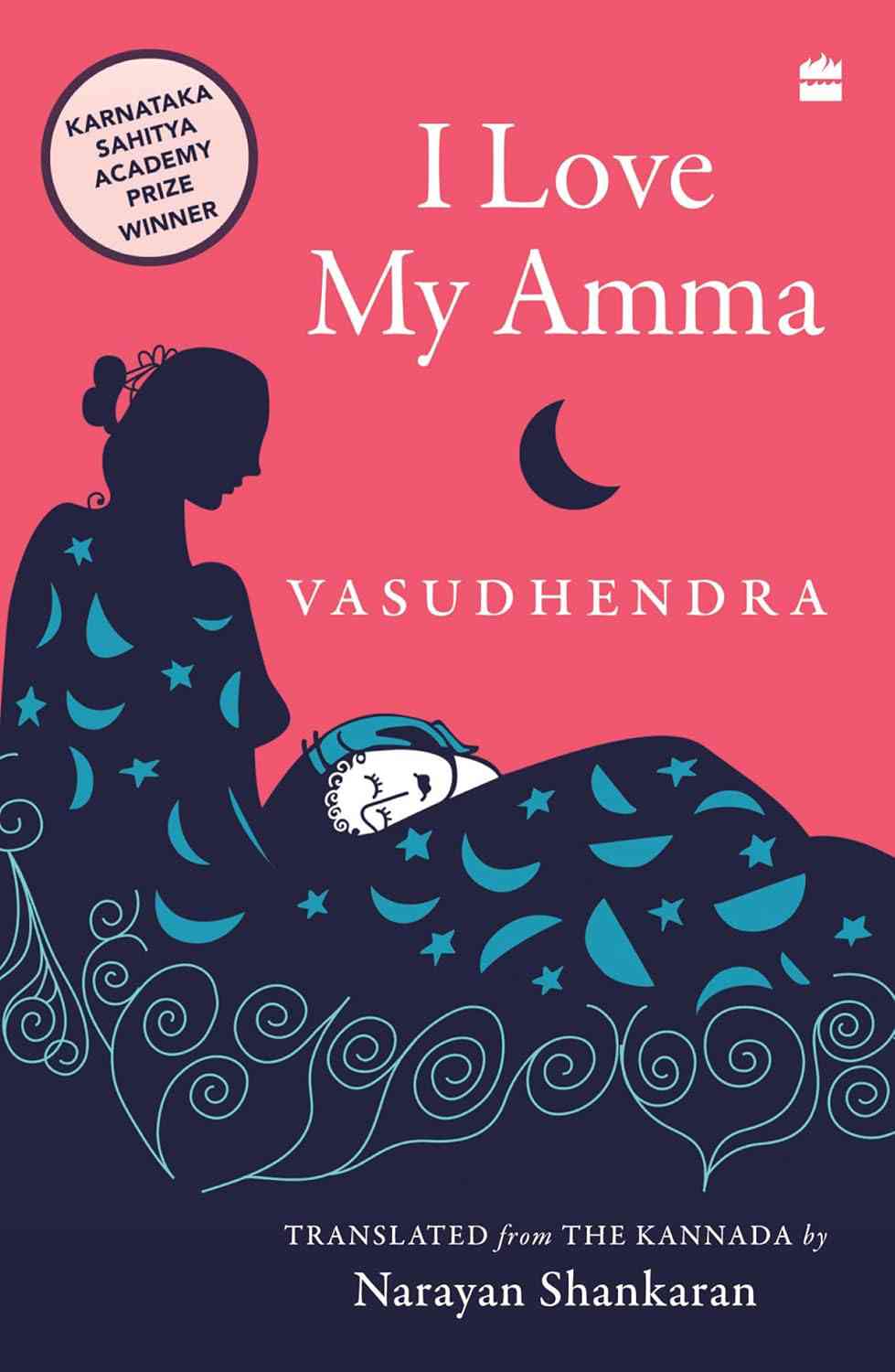
Excerpted with permission from I Love My Amma, Vasudhendra, translated from the Kannada by Narayan Shankaran, HarperCollins India.
